Orquestra Popular de Câmara
 Foto: Kris Knack
Orquestra Popular de Câmara contains in its instrumentation a mixture of the traditional and popular, including cello, piano, acordion, mandolin, indigenous flutes and saxophones. The group was created in 1997 and since then has been presenting concerts all over Brazil.
At the European tour in 2003, the Orquestra Popular de Câmara participated in 8 festivals in countries such as Germany, France, Belgium and Spain. The Orquestra has already presented itself with artists as Hermeto Paschoal, Luiz Melodia, Zelia Duncan, Orquestra Jazz Sinfonica.
Orquestra Popular de Câmara is an association of the best Brazilian instrumentalists, which produces original and innovative arrangements, such as: Benjamim Taubkin (piano), Teco Cardoso (sax and flutes), CaÃto Marcondes, Zezinho Pitoco, Guello and Ari Colares (percussion), Ronen Altman (mandolin), Lulinha Alencar (accordion), Sylvinho Mazzucca (bass) and Dimos Goudaroulis (cello).
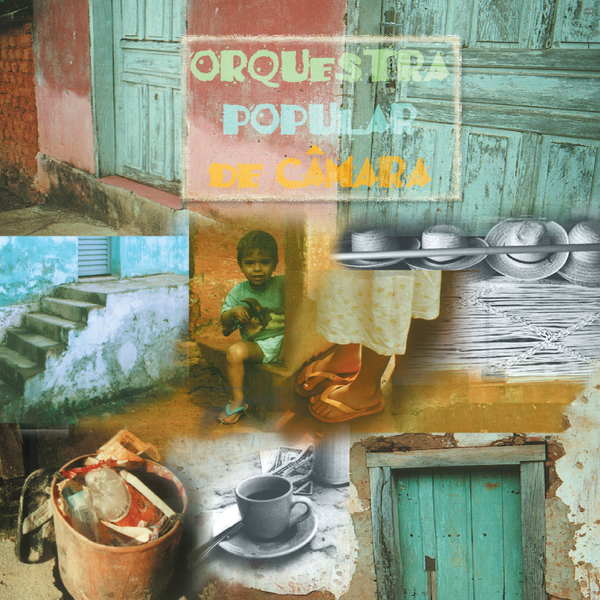
CD Orquestra Popular de Câmara
Their first CD, released in 1998 by the Núcleo Contemporâneo label in São Paulo, was both a public and critical success. In 1999 it was chosen the best instrumental album by the ´Prêmio Movimento´ Award and also by the Canadian site ´Caravan.´ Also in 1999, the group participated in the Miami Jazz Festival. It was released in the United States in 2003, by Adventure Records.
CD Danças, Jogos e Canções (Dances, Plays and Songs)
The second CD was released, also by Núcleo Contemporâneo, in May of 2003.
The intention was to present several renditions that each of the group’s founders – musicians, solists, composers, arrangers – contributed to the orchestra. It was also intended to maintain the ideas that were present in the first album and in the group´s formation itself: the appropriation of popular and erudit languages, and regarding the arrangements, the mixture of opened and closed structures.
Audio clip: Adobe Flash Player (version 9 or above) is required to play this audio clip. Download the latest version here. You also need to have JavaScript enabled in your browser.
www.youtube.com/nucleocontemporaneoÂ
Â
Musicians
Ari Colares (percussion)
Music professor at the Universidade Livre de Música and at the University of Sao Paulo (the most important university in Brazil.) Ari has played with: Naná Vasconcelos, Egberto Gismonti, Winton Marsalis, Césa Camargo Mariano, among others.
Recently, he has been playing with: Vanessa da Mata, Fortuna, Banda Heartbreakers and others. Besides that, Ari has an instrumental project with Heloisa Ferandes, a percussion/piano percussion duo, which started when they were nominated for the best Instrumental album in the VISA Awards.
Benjamim Taubkin (piano)
Benjamim Taubkin started his career in the 70’s and since then he has played with Rafael Rabello, Paulo Moura, Marlui Miranda, among others. Playing with Zizi Possi, he participated in her CD “Valsa Brasileira” – chosen as the best Brazilian Popular Music album by the SHARP Award in 1993 – and also participated in her program “Sobre todas as Coisas”.
In 1989, Benjamim created the Brazilian Memory Project, where he produced several concerts as “Violões” (Guitars), “Piano” and “Arranjadores” (Masters of Arrangers) , that were all released by his Núcleo Contemporâneo label, which he founded together with Teco Cardoso. His first CD, “A Terra e o Espaço Aberto”, was released in 1997, also by his label, and was a nominee for the ´Prêmio Movimento´ and ´Sharp´ Award.
CaÃto Marcondes (percussion)
CaÃto had his CD “Porta do Tempo” released in Brazil and Europe. Airto Moreira considered him the ‘Villa Lobos of percussion”. Together with Teco Cardoso, he has made the soundtrack for the movie “O Cineasta da Selva”. The soundtrack was released by Núcleo Contemporâneo in 1998.
In August of 2001 CaÃto had his CD “North Meets South / Sul Encontra o Norte” (a duo with the american violinist Tracy Silverman) released by the same label.
Dimos Goudaroulis (violoncello)
Born in Greece, he studied with Phillipe Muller and Reine Flachot. Living in Brasil since 1996, Dimos has been presenting in several musical formations: baroque music with the Tripo ContÃnuo group; and the contemporary music, of the Novo Horizonte group.
Guello (percussion)
Guello has been playing with major musicians such as Zizi Possi (her latest four CD´s), Chico César, Joyce, and others. He is also former member of the Bonsai Group, which released the latest CD “Desdobraduras”.
Lulinha Alencar (acordion)
Pianist, composer, arranger and acordion player, Lulinha began studying piano and jazz improvisation. He formed the instrumental trio LSD´Jazz and also formerly was in the Banda Buscapé, focusing on regional music. As an accordion player, Lulinha has been playing with groups such as Mafuá, Mawaca, Antônio Barros and others.
Ronen Altman (mandolim)
Representing the new generation of mandolinists, Ronem performed on the soundtrack of Walter Salles Jr.´s movie “Terra Estrangeira” and in several editions of the choro festival “Festival Chorando Alto”.
Sylvinho Mazzucca (bass)
Sylvinho Mazzucca has played with major Brazilian artists such as Ivan Lins and Zona Azul. He is one of the most busy bass players in Brazil.
Teco Cardoso (sax and flutes)
Winner of the Sharp Award in 1998 (best instrumentalist) with his CD “Meu Brasil”, Teco is one of the owners of Núcleo Contemporâneo record. He has been touring with his own group and also with artists such as Joyce and Dori Caymmi, among others. Together with CaÃto Marcondes, Teco was responsible for the soundtrack of the movie “Cineasta da Selva”. In 1999 Teco and flutist Léa Freire released the CD “Quinteto”.
Zezinho Pitoco (percussion)
Pitoco was involved in the founding of several Brazilian music groups such as “Mexe com Tudo” and “Mistura e Manda”. He is now the musical director for Antônio Carlos Nóbrega.
Press
“It´s not easy to define this music. There is a feeling one cannot easily describe the music, even though the musicians know it well, and that leads us beyond our mere passions.
“Musical”, perhaps, it´s a possible name for this feeling.
It´s from the bottom of this almost ´impersonal´ emotion where the Orquestra found some reserves of meaning. And it´s to this spot where we go now, where we always want to go, following the black bird of music, down the river.”
Arthur Nestrovski (Folha de S.Paulo, 14/10/2002)*
*’Danças, Jogos e Canções’ got the highest rate (four stars) from Arthur Nestrovski.
“What I love about this music is that it sounds like now in Brazil to me, without really being that traditional somehow, even though it is obvious that the players know all about the sources of what they are playing.”
Pat Metheney
The interpretation of Brazilian music is something that has been covered in virtually every context, from intimate solo and duet settings to full-out orchestral works. The key aspect of whatever setting is used is whether it maintains its authenticity. While traditional jazz groupings can cover the material, moulding it to a more North American rendering, the most genuine works have arguably been those which use many of the native South American instruments. While Egberto Gismonti,orchestral interpretation of his more popular works on 1997, Meeting Point was academically interesting, it lacked a certain ethnic authenticity that ultimately resulted in a valiant but failed attempt.
Not so the Orquestra Popular de Camara who, by combining native instruments like bandolim, bamboo flute and a variety of percussion instruments with the less conventional cello and viola, create an intriguing blend of textures that is refreshingly different while, at the same time, maintaining complete authenticity.
Orquestra Popular de Camara is a wholly original work by a group of musicians who forsake individuality to create a unique group sound that blends instruments from the rainforests of Brazil with more conventional instruments like piano, saxophone and bass. The Orquestra’s complete lack of ego is what makes it work. While the ensemble numbers thirteen players, it is rare that everyone is in the pool at once. Instead, piano and cello combine with berimbau in a chamber-like setting, creating a peaceful ambience at the beginning of �Suite para Pular Cama (Ever o Brasil) that leads into a Gismonti-informed folk-like passage featuring bandolim, piano, percussion and flute. Monica Salmaso wordless vocals lend an ethereal quality to Bayaty another piece which begins in a tranquil fashion, only to segue into a relaxed but poignant movement where voice and flute combine seamlessly.
The overall ambience of Orquestra Popular de Camara is one of folk-like elegance. Individual players are given brief opportunities to solo, often-times in the form of a dialogue with another instrument, sometimes combining in ways that sometimes blur the boundaries between them. Cello and accordion combine in a duet at the beginning of Parafuso creating a new and distinct texture. One of the outstanding characteristics of the recording is, in fact, how the various instruments are blended to create timbres that are organic yet strangely new.
Moving, texturally rich, filled with unique takes on common forms that are both challenging and completely accessible, Orquestra Popular de Camara manages to bring a vital new slant to the popular Brazilian folk form. Not quite folk, not quite jazz, not quite classical, it is difficult to pigeon-hole, but in the final analysis its sheer elegance and deep expression make it an album well worth investigating.
John Kelman
Adventure Music
This orchestra has a new take on the creativity of Brazilian music; the variety of instrumentation adds to its uniqueness; vilincello, country viola, piano, zabumbha, accordion, bendolin, bamboo flute and saxophones combine to create different styles from different origins with added individual panache. The opening track “Bajaty” floats over you in waves, haunting, mystic, fresh and exciting. “Vinheta Espanha Ou Do Agreste?” (Spanish Vignette or Wild Northeast?) Is thirty six seconds of African sound. “Parafuso” (Screw) has an accordion, flutes and colective percussion creating an organic and beautifully timbered sound. “Choro Moreno” (Dark Skinned Choro) starts with the haunting voice of Monica Salmaso over the piano, flutes that compliment an almost eerie union with the voice. This is a CD of effects and feelings, at times misty, always organic, richly timbered complex and compelling. Pianist Benjamin Taublein and flutist Mane Silveria do most of the arranging. Have the Orquestra Popular de Camara perform at your school concert as visiting guests and they would probably bring the house down; no need for the effect of dry ice, they will create their own. Excellent CD.
Ferdinand Maylin
Copyright Jazz Now, July 2005 edition Â
Â
Â